

How to Find the Right Above-Ground Pool Liner Size
Choosing the correct above-ground pool liner size is one of the most important steps in maintaining or replacing your pool liner. An incorrectly sized liner can cause wrinkles, overstretching, premature wear, or even installation failure. This guide walks you through how to accurately measure your pool, understand liner depth and liner types, and confidently choose the correct liner size.
TL;DR – Above-Ground Pool Liner Sizing Checklist
· Confirm your pool shape (round or oval)
· Measure inside wall-to-wall dimensions (round = diameter, oval = length and width)
· Measure pool wall height only from the base of the wall to the top of the wall (do not include the top rail)
· Determine liner type (overlap, beaded, J-hook, or UniBead)
· Understand whether an expandable overlap liner is appropriate for your pool
· Do not size based on the old liner label alone — always re-measure
· Install liners only when temperatures are 65°F or warmer for proper vinyl stretch
Why Pool Liner Sizing Matters
Above-ground pool liners are manufactured to precise specifications. Even small measurement errors can result in a poor fit, leading to stress on seams, cosmetic issues, or shortened liner lifespan. Over time, pools may shift or settle slightly, which is why it’s critical to measure the pool itself rather than relying on an old liner label.
What You Need Before Measuring
· Flexible tape measure
· Access to the inside wall of the pool
· Knowledge of your pool shape (round or oval)
Pro Tip: Always measure the pool structure itself. Liners stretch over time and are not reliable for sizing.
How to Measure a Round Above-Ground Pool
Measure straight across the pool from inside wall to inside wall, passing directly through the center of the pool. Take at least two measurements at different angles to confirm accuracy. Use the largest consistent measurement when determining size.
How to Measure an Oval Above-Ground Pool
Measure both the primary length and width from inside wall to inside wall.
Measure the Pool Wall Height
Wall height is measured from the base of the pool wall to the top of the wall only. Do not include the top rail or coping in this measurement.
Common wall heights are 48 inches, 52 inches, and 54 inches.
Wall height is most critical for beaded and UniBead liners, which must match the pool wall height precisely. Overlap liners offer more flexibility and are less sensitive to small wall height variations.
Understanding Liner Depth
Flat Bottom Liners
Flat bottom liners are designed for pools with a uniform, level base. These are commonly used in standard above-ground pool installations. Liner depth is also heavily dependent on which type of liner attachment type you need.
Choosing the Correct Liner Attachment Type
Above-ground pool liners are installed using one of the following methods:
· Overlap Liners – The most common and economical option. Vinyl overlaps the pool wall and is secured with coping strips.
· Beaded Liners – Snap into a bead receiver track for precise alignment and easier replacement.
· J-Hook Liners – Hang directly over the pool wall without bead track.
· UniBead Liners – A versatile option that can be installed as either a beaded or J-hook liner.
See diagram to different liner attachments HERE
Popular Liner Sizes – Round Pools
Liner availability may include overlap, beaded, or UniBead depending on pool size and wall height.
|
Common Round Pool Diameters |
Common Round Pool Wall Heights |
|
12’ Round 15’ Round 18’ Round 21’ Round 24’ Round |
48” 52” 54” |
Quick Liner Sizing Chart – Oval Pools
|
Common Oval Pool Diameters |
Common Oval Pool Wall Heights |
|
12' x 18' 15' x 24' 15' x 30' 18' x 33' |
48” 52” 54” |
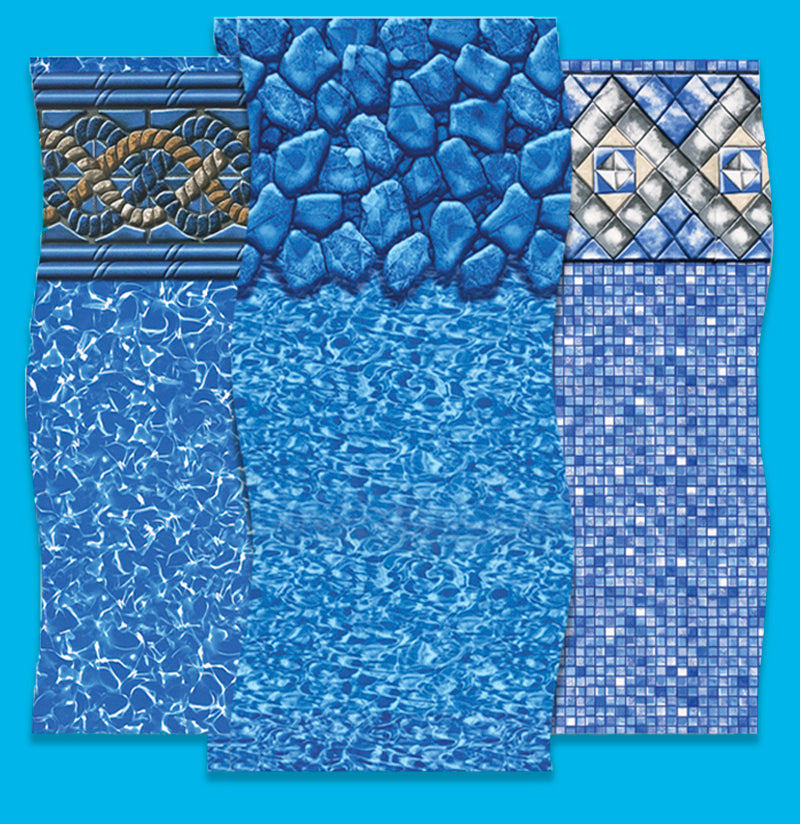
Selecting Your Liner Pattern
Once sizing and liner type are confirmed, you can choose your liner pattern. Tile, swirl, and mosaic designs vary by installation type (overlap, beaded, or UniBead).
See link to Swimline Pool Liner Patterns HERE
Common Pool Liner Sizing Mistakes to Avoid
· Measuring the old liner instead of the pool
· Ignoring wall height
· Assuming all liners stretch the same
· Ordering a flat liner when expansion is needed
· Measuring only once
Final Pool Liner Sizing Tip
If your measurements fall between standard sizes or your pool shows signs of age, settling, or base variation, an expandable liner is usually the safest option. When in doubt, measure again and size conservatively.
Accurate measurement is the foundation of a successful liner installation and long liner lifespan.


